Brain & Cognitive
The nootropic market sells certainty the trials do not support. Here is the mechanism filter — which compounds touch which neurotransmitter system, which actually move cognition in healthy people, and which foundations out-perform every stack on the shelf.
- The mechanism filter — five systems, not one
- Modafinil and armodafinil — the only smart drug with a real case
- Creatine for cognition — not just muscle
- Caffeine + L-theanine — the most studied combination
- Psilocybin and ketamine — therapeutic, not casual
- Stacks that don't hold up
- The boring foundations that beat every stack
The mechanism filter — five systems, not one
"Nootropic" is a marketing word. Cognition isn't one knob; it's at least five interacting neurotransmitter systems, and most products on the shelf either touch one of them weakly or touch none of them at all. The first useful filter is to ask which system a compound is acting on and what that system actually controls.
- Cholinergic — acetylcholine signaling, central to attention and working memory. Targeted by AChE (acetylcholinesterase) inhibitors like donepezil, by precursors like Alpha-GPC and CDP-choline, and by nicotinic agonists including nicotine itself.
- Dopaminergic — dopamine signaling, central to motivation, salience, and effort allocation. Targeted by stimulants (methylphenidate, amphetamine), by modafinil indirectly, and modestly by tyrosine under acute stress.
- Glutamatergic — glutamate signaling through NMDA (N-methyl-D-aspartate) and AMPA receptors, central to long-term potentiation and learning. Targeted by ketamine (NMDA antagonist), racetams (AMPA modulators, debated), and indirectly by sleep itself.
- Adenosine — the sleep-pressure signal that accumulates across the waking day. Antagonized by caffeine. Not enhancement — pressure relief.
- Orexin / histamine — wake-promoting systems in the lateral hypothalamus and tuberomammillary nucleus. Targeted upstream by modafinil and by the next-generation wake-promoting agents.
A compound that doesn't act on one of these systems is unlikely to move cognition at clinically meaningful effect sizes, regardless of the mechanism story on its label.
Modafinil and armodafinil — the only smart drug with a real case
Modafinil is the only over-the-counter-adjacent compound with consistent cognitive signal in healthy, non-sleep-deprived adults. The Battleday & Brem meta-analysis (Eur Neuropsychopharmacol 2015) reviewed 24 studies and found reliable improvements on attention, executive function, and learning — with effect sizes increasing as task complexity increased. Simple reaction time barely moved; complex planning tasks moved meaningfully.
Mechanism is messier than the marketing suggests. Modafinil is a weak DAT (dopamine transporter) inhibitor, but it also engages orexin, histamine, and noradrenergic systems. Armodafinil is the R-enantiomer — same pharmacology, longer half-life (roughly 15 hours versus 12–15 for racemic modafinil), which matters for second-half-of-day rebound.
Modafinil is the only "smart drug" with a real cognitive case in healthy people. It is also a prescription-only Schedule IV substance. Both facts are true at once.
Dosing and tolerance, by tier
Used as a tool, not a habit. Reserved for genuinely cognitively demanding days. Tolerance management is mostly about frequency ceiling.
The on-label dose for narcolepsy and shift-work disorder. Single morning dose; later than 11 a.m. predicts sleep disruption.
Off-label for cognitive enhancement. Cardiovascular and dermatologic risks (rare but serious Stevens-Johnson syndrome) are not zero. Requires a clinician relationship.
Modafinil is prescription-only in the US, UK, Canada, and most jurisdictions, and is Schedule IV in the US. The compound has a real cognitive case. Sourcing outside a clinician relationship is illegal in most places and exposes you to adulteration risk that the trial data does not transplant to.
Creatine for cognition — not just muscle
Creatine monohydrate is the most-studied performance supplement in existence, and its cognitive literature has quietly caught up with the strength literature. The mechanism is straightforward: creatine phosphate is the brain's fast-recycling energy buffer, and neural tissue with elevated creatine stores tolerates metabolic stress better.
Three contexts where the data is strongest:
- Sleep deprivation. Avgerinos et al. (Exp Gerontol 2018) reviewed creatine and cognition and found the largest effects in sleep-deprived and stressed populations — exactly when energy buffering matters most.
- Vegetarians. Rae et al. (Proc Biol Sci 2003) showed measurable improvement in working memory and intelligence-task performance in vegetarians supplementing 5 g/day for six weeks. Plant diets are creatine-deficient at baseline, so the effect size is larger where the deficit is real.
- Aging brain. Multiple smaller trials show modest cognitive benefit in older adults, particularly on tasks taxing short-term memory and processing speed.
Dosing is unglamorous: 3–5 g/day of creatine monohydrate. Loading phases (20 g/day for a week) are optional and mostly drive earlier saturation. Higher doses (10 g/day) are being studied for cognitive endpoints specifically, but the standard dose is what the trial data anchors on.
Caffeine + L-theanine — the most studied combination
Caffeine is adenosine antagonism — it doesn't add alertness, it blocks the brake. L-theanine is an amino acid from tea that increases alpha-wave activity and modestly raises GABA, glycine, and serotonin. Combined, they are the most-studied cognitive pairing in the consumer space.
Owen et al. (Nutr Neurosci 2008) tested 50 mg caffeine plus 100 mg L-theanine and found reliable improvements in attention-switching tasks and reduced susceptibility to distraction relative to either compound alone. Effect sizes are modest, but the combination consistently out-performs caffeine alone on subjective jitter and rebound.
Where the combination stops working
Tolerance to caffeine's adenosine antagonism develops within 1–2 weeks of daily use, and what feels like a cognitive lift in a habitual user is mostly withdrawal reversal — net cognition at steady-state caffeine intake is close to baseline. Two practical implications: cycling (2–3 days on, 1 off, or weekday-only) preserves the acute effect; and the L-theanine component is essentially tolerance-free, so it can be used continuously while caffeine cycles.
Psilocybin and ketamine — therapeutic, not casual
The psychedelic literature is the only place in the cognitive-enhancement conversation where effect sizes match the marketing — and the marketing is still ahead of the regulatory reality.
Psilocybin
Carhart-Harris and colleagues at Imperial College London ran the head-to-head trial against escitalopram (a standard SSRI — Selective Serotonin Reuptake Inhibitor) in moderate-to-severe depression (Carhart-Harris et al., NEJM 2021). Two 25 mg doses of psilocybin, three weeks apart, were non-inferior to six weeks of daily escitalopram on the primary depression scale, and superior on several secondary measures. Davis et al. (JAMA Psychiatry 2021) reported large effect sizes in a separate randomized trial of psilocybin-assisted therapy for major depressive disorder.
Mechanism is 5-HT2A (serotonin 2A receptor) agonism, paired with a therapeutic context. The rapid-onset case — meaningful depression response within hours to days, rather than the four-to-six weeks of an SSRI — is what makes the FDA Breakthrough Therapy designation defensible. Phase 3 trials are ongoing as of this writing; psilocybin is not yet FDA-approved.
Ketamine
Ketamine for depression has a longer paper trail. Berman et al. (Biol Psychiatry 2000) was the first randomized trial showing rapid antidepressant effect within hours of a single sub-anesthetic infusion. Sanacora and colleagues (JAMA Psychiatry 2017) published the American Psychiatric Association consensus on ketamine use in mood disorders. Esketamine (the S-enantiomer) was FDA-approved as Spravato in 2019 for treatment-resistant depression.
Mechanism is NMDA-receptor antagonism, which triggers a downstream cascade of synaptic plasticity — increased BDNF (Brain-Derived Neurotrophic Factor) signaling and dendritic spine regrowth in preclinical models. The rapid-onset case here is even stronger than psilocybin: hours, not days. The durability case is weaker — without repeated dosing or psychotherapy scaffolding, the effect typically decays within 1–2 weeks.
Neither psilocybin nor ketamine is a nootropic. They are rapid-onset antidepressants under investigation, used in controlled clinical settings with screening, supervision, and integration. The recreational and "microdose" use cases sit outside the trial data and outside the regulatory framework.
Stacks that don't hold up
The cognitive-supplement aisle is full of compounds with plausible mechanism stories and underwhelming effect sizes. Mechanism without effect size doesn't count. Four of the most over-marketed:
- Bacopa monnieri. Cholinergic and antioxidant mechanism. Reviews show small, slow-onset improvements in memory recall after 8–12 weeks of supplementation, but effects are mixed across trials and don't approach the magnitude the marketing implies. Plausible. Not transformational.
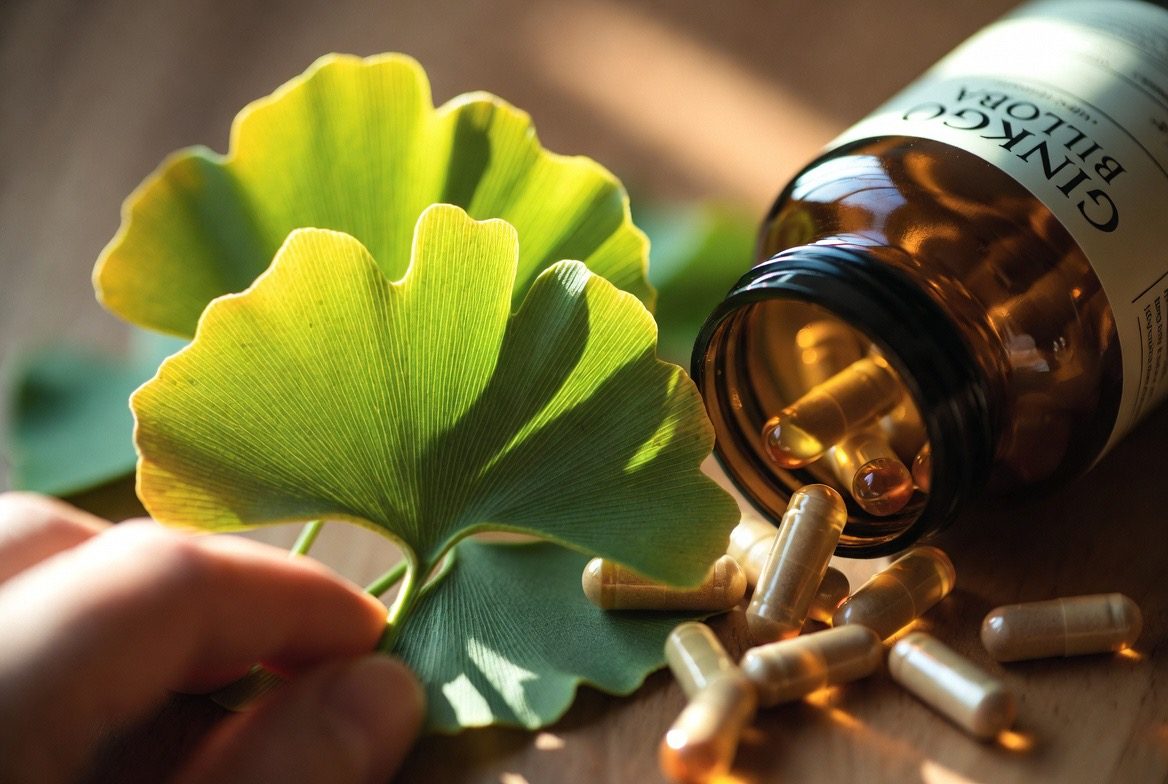
- Ginkgo biloba. Vascular and antioxidant mechanism. Large trials in healthy adults and in early dementia have been consistently negative or null. The compound persists in the market on inertia, not data.
- Alpha-GPC. Choline precursor — mechanism is real, and acute single-dose trials show modest improvements in power output and reaction time. Cognitive trials in healthy adults are sparse and small. The dementia literature is more positive but doesn't transplant cleanly to healthy users.
- Lion's Mane (Hericium erinaceus). Mori et al. (Phytother Res 2009) is the trial everyone cites — a small Japanese study in older adults with mild cognitive impairment that showed modest improvement on a cognitive scale during supplementation and regression after stopping. Important caveats: small sample, narrow population, not replicated at scale in healthy adults. The NGF (Nerve Growth Factor) mechanism is mostly preclinical and in vitro. Human cognitive trials in healthy adults are essentially absent.
Mechanism is necessary, not sufficient. A compelling receptor story doesn't pay off until a randomized trial in the target population shows an effect size worth the time and the money.
The boring foundations that beat every stack
The single most uncomfortable finding in the cognitive-enhancement literature is that the foundations — the ones with the lowest unit economics for supplement companies — have larger effect sizes than anything in the stack.
- Sleep. A single night of partial sleep restriction (4–5 hours) degrades next-day attention, working memory, and decision-making by margins that no nootropic in this article closes. Chronic short sleep is the highest-leverage cognitive intervention and the one the wellness market sells around because there is nothing to monetize except a mattress.
- Exercise. Erickson et al. (PNAS 2011) showed that one year of aerobic exercise increased hippocampal volume in older adults — reversing roughly one to two years of age-related atrophy — and the effect correlated with BDNF. Strength training adds an independent signal on executive function. No supplement has shown a structural brain change of this magnitude.
- Cardiovascular health. Cerebral blood flow is the rate-limiting input to cognition that nobody markets. Blood pressure control, lipid management, and aerobic capacity are cognitive interventions even when they are sold as cardiac ones.
- Omega-3 (EPA/DHA). Yurko-Mauro et al. (Alzheimers Dement 2010) showed improvements in episodic memory in older adults with mild memory complaints supplementing DHA. Effects in younger, healthy adults are smaller, but structural — DHA is the dominant fatty acid in neural membranes, and dietary intake in most Western diets is below the level the trial literature anchors on.
The framework, in one paragraph
Get the foundations right first — they have the largest effect sizes, the lowest cost, and the best safety profile. Layer caffeine plus L-theanine where adenosine pressure is the bottleneck and tolerance is managed. Add creatine where the deficit is real (vegetarian, sleep-deprived, aging). Reserve modafinil for genuinely high-demand days, with a clinician, inside the regulatory framework. Treat psilocybin and ketamine as therapeutics under supervision, not enhancement tools. Skip the rest until the trial data catches up to the mechanism stories.
This is not a protocol. It is a framework you take to a clinician — or to the next layer of reading on this site. Individual compound pages cover dosing, contraindications, and interactions in detail. The point of the hub is the filter.